
Voice Disorders
Support for Kids Experiencing Hoarseness, Vocal Strain, or Loss of Voice
If your child’s voice sounds raspy, breathy, or strained — or they often lose their voice — we’re here to help. Voice therapy can restore healthy vocal habits and bring confidence back to communication.

What Are Voice Disorders?
When the Voice Doesn’t Sound or Work as It Should
Voice disorders can affect how a child sounds or how comfortable they feel when speaking. This might show up as:
Hoarseness or Breathiness
A voice that sounds rough, weak, or tired even after a short time speaking.
Chronic Throat Clearing or Coughing
Repeated habits that can damage the vocal cords over time.
Loss of Voice (Aphonia)
Complete or temporary inability to speak audibly.
Vocal Strain or Fatigue
Your child may feel pain, tightness, or discomfort when talking for extended periods.
Our Approach to Voice Therapy
Healing and Strengthening the Voice Through Gentle, Personalized Care
We provide thorough voice evaluations and create therapy plans that are engaging, child-friendly, and effective.
Voice Rest & Hygiene Education
We teach how to care for the vocal cords with daily habits and routines.
Breath Support & Resonance Training
Helping children use their breath efficiently for a stronger, clearer voice.
Safe Vocal Techniques
We coach your child on how to speak without strain, shouting, or whispering — habits that can harm the voice.
Emotional Support
We create a judgment-free space where children feel heard and understood.
Flexible Sessions, Designed Around Your Child’s Needs
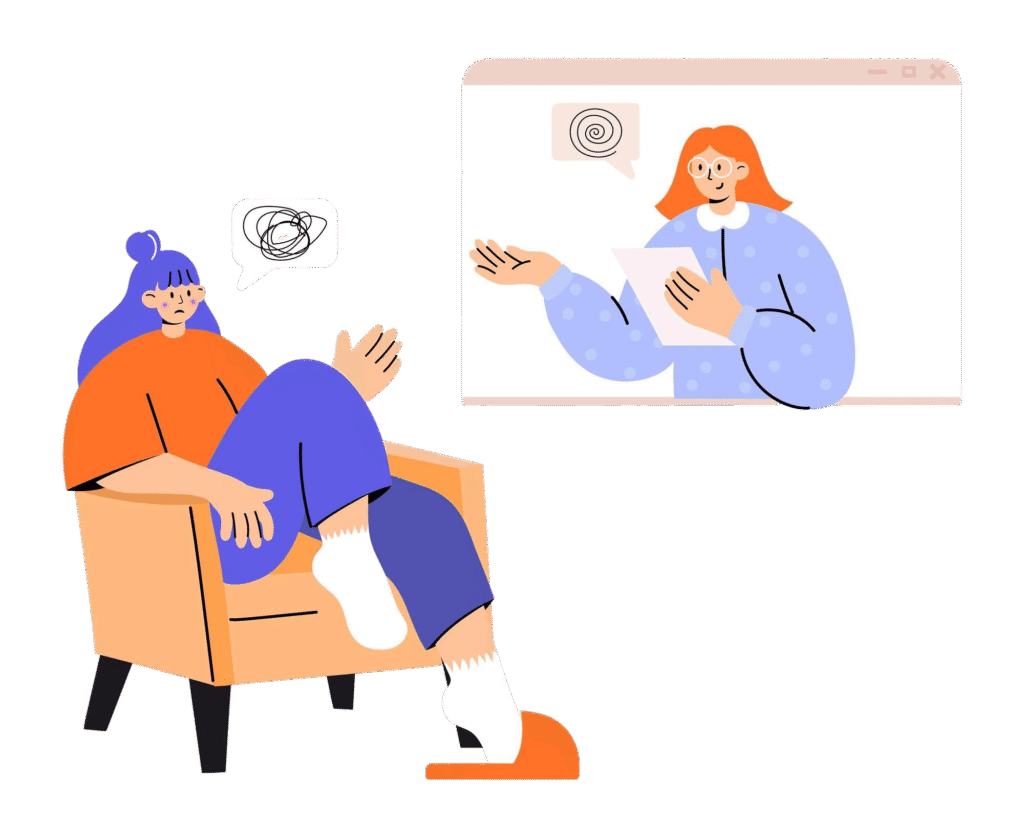
Tic-Talk-Toe offers flexible formats to meet your needs—whether that’s from the comfort of your home or in our engaging learning spaces.
01
In-Person Voice Therapy
Hands-on voice work with gentle techniques tailored for children.
02
Virtual Voice Coaching
Effective strategies and exercises from the comfort of your home.
What Are Voice Disorders in Children?
A voice disorder occurs when the quality, pitch, loudness, or flexibility of a child’s voice is different from what is expected for their age and gender — and when that difference interferes with communication or draws negative attention. Voice disorders in children are more common than many parents realize and are highly treatable with the right therapy approach.
A child’s voice is produced by the vibration of the vocal folds in the larynx. When something affects how the vocal folds work — whether from misuse, overuse, a structural problem, or a medical condition — the result is a voice that sounds hoarse, raspy, breathy, too high, too low, or that fatigues easily.
At Tic-Talk-Toe Speech and Language Therapy in Raleigh, NC, we help children develop healthy vocal habits and a strong, clear voice they can rely on.
Signs Your Child May Have a Voice Disorder
- A chronically hoarse, raspy, or breathy voice
- Voice that sounds strained or effortful
- Pitch that seems too high or too low for their age
- Voice that fades or gives out after talking for a short time
- Frequent throat clearing or coughing
- Your child complains that their throat hurts when they talk
- Voice that gets significantly worse throughout the day
- Your child has lost their voice frequently or for extended periods
- Teachers or others comment that your child’s voice sounds unusual
- Your child speaks very loudly all the time without realizing it
If several of these apply to your child, a free screening at Tic-Talk-Toe Speech and Language Therapy in Raleigh, NC is an important first step.
What Causes Voice Disorders in Children?
Voice disorders in children can have a variety of causes, including:
- Vocal nodules — small calluses that form on the vocal folds from chronic misuse or overuse, most common in active, loud children
- Vocal fold polyps or cysts — benign growths that affect voice quality
- Muscle tension dysphonia — excessive tension in the muscles around the larynx affecting voice production
- Reflux — acid or laryngopharyngeal reflux can irritate the vocal folds
- Chronic yelling or screaming — common in children who are very active, sing frequently, or cheer loudly at sports
- Allergies or chronic respiratory conditions — affecting the airway and vocal fold function
- Neurological conditions — affecting the nerve supply to the vocal folds
In many cases a medical evaluation by an ENT (ear, nose, and throat physician) is recommended alongside speech therapy to ensure the underlying cause is properly identified and treated.
What Does Voice Therapy Look Like at Tic-Talk-Toe?
Voice therapy at Tic-Talk-Toe Speech and Language Therapy is gentle, evidence-based, and completely tailored to your child’s specific voice concerns and lifestyle. We work collaboratively with your child’s medical team when needed to ensure a comprehensive approach to treatment.
Therapy may include:
- Vocal hygiene education — teaching children and families about habits that protect and support healthy vocal function, including hydration, avoiding throat clearing, and reducing vocal strain
- Resonant voice therapy — techniques that help children produce voice with less effort and tension
- Pitch and loudness training — helping children find and use their optimal pitch and volume
- Breathing exercises — developing breath support for healthy voice production
- Relaxation techniques — reducing tension in the throat and neck muscles
- Yell less strategies — practical approaches for active children who frequently misuse their voice
We make voice therapy engaging and age-appropriate — children learn best when they are having fun, and we bring that philosophy to every session.
Sessions are available in-person at our Raleigh, NC clinic, via teletherapy, and in hybrid formats across the Triangle area of North Carolina.
Help Your Child Find a Healthy, Strong Voice.
Voice disorders are very treatable — and the sooner your child gets support, the better. Tic-Talk-Toe Speech and Language Therapy serves families across Raleigh, Durham, Cary, Wake Forest, and the greater Triangle area of North Carolina. Book a free screening today and let’s help your child communicate with a voice that is clear, comfortable, and confident.