
Fluency Disorders (Stuttering)
Support for Children Who Stutter — One Word at a Time
Every child deserves to speak with ease. Our personalized fluency therapy focuses on reducing disfluencies for smoother, confident speech.
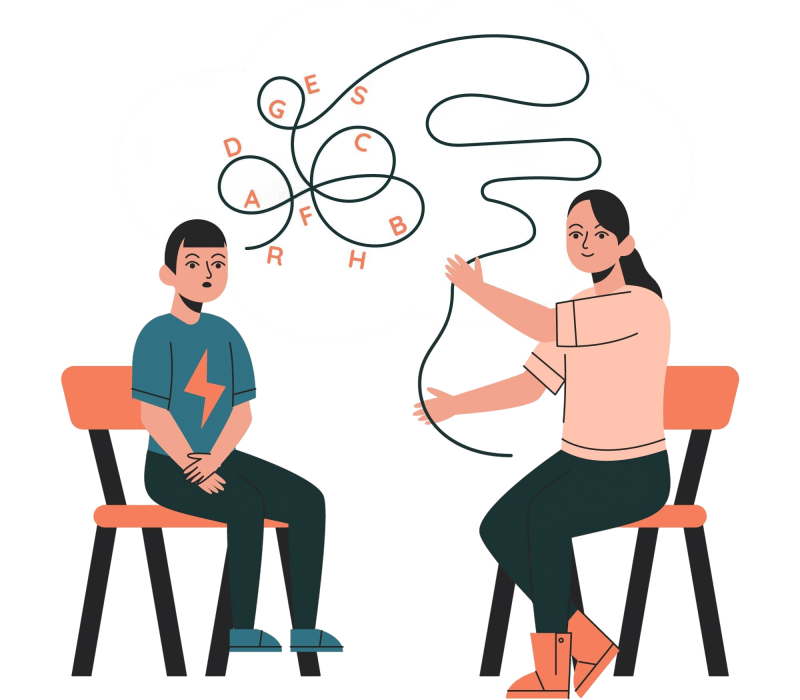
Understanding Stuttering
Fluency Support That Goes Beyond the Surface
Stuttering is more than just a speech disruption — it can affect a child’s self-esteem, participation, and willingness to speak. We take a gentle, supportive approach to help children feel safe, empowered, and in control of their speech.
Types of Disfluencies
Helping children recognize and manage repetitions, blocks, and prolongations.
Breath & Rate Control
Teaching breathing and pacing techniques to create smoother speech patterns.
Desensitization Strategies
Reducing anxiety and fear around speaking through gradual exposure and positive experiences.
Confidence Building
Creating a safe space where children feel proud to use their voice.
Progress You’ll Hear and Feel
Small Changes That Make a Big Difference
We focus on meaningful outcomes that support your child in real conversations and daily communication.
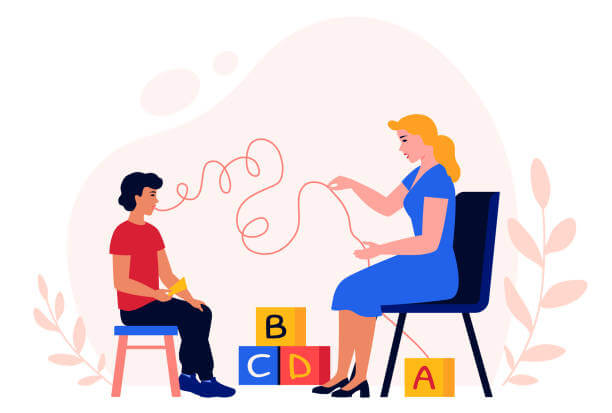
Improved Speech Fluency
Less tension, fewer blocks, and smoother speech over time.
Reduced Speaking Anxiety
Kids gain confidence in their ability to communicate without fear.
Better Communication in Class & Social Settings
Increased participation and connection with peers and adults.
Long-Term Self-Advocacy
We equip children with tools they can use for life, in every speaking situation.
Flexible Options. Real Results.
We provide stuttering support in ways that work best for your child’s comfort and schedule.
01
Online Fluency Sessions
Interactive, one-on-one stuttering therapy from the comfort of home.
02
In-Person Fluency Therapy
Personalized, hands-on support in a calming and encouraging environment.
What Are Fluency Disorders and Stuttering?
Fluency disorders affect the natural flow and rhythm of speech. Stuttering is the most common fluency disorder and involves involuntary repetitions, prolongations, or blocks in speech — for example, repeating sounds (“b-b-ball”), stretching sounds (“ssssun”), or getting stuck completely before a word comes out.
Stuttering typically emerges between ages 2 and 5, often during a period of rapid language development. While some children naturally outgrow stuttering, many do not — and for those children, early therapy makes a significant difference. At Tic-Talk-Toe Speech and Language Therapy in Raleigh, NC, we provide evidence-based fluency therapy that helps children communicate with greater ease, confidence, and freedom.
Signs Your Child May Have a Fluency Disorder
- Repeating sounds, syllables, or words (e.g. “I-I-I want that”)
- Stretching or prolonging sounds (e.g. “Mmmmommy”)
- Getting stuck or blocked before words come out
- Visible tension in the face, neck, or shoulders while speaking
- Blinking, looking away, or other secondary behaviors when speaking
- Avoiding certain words, situations, or speaking altogether
- Stuttering that has lasted longer than 6 months
- Stuttering that is getting worse rather than better
- Your child seems embarrassed, anxious, or frustrated about speaking
If several of these apply to your child, a free screening at Tic-Talk-Toe Speech and Language Therapy in Raleigh, NC is a great first step.
What Does Fluency Therapy Look Like at Tic-Talk-Toe?
Fluency therapy at Tic-Talk-Toe Speech and Language Therapy is compassionate, individualized, and focused on the whole child — not just the stutter. We understand that stuttering affects not just how a child speaks, but how they feel about speaking. Our approach addresses both.
Depending on your child’s age, severity, and goals, therapy may include:
- Fluency shaping techniques — teaching smoother, more controlled speech patterns
- Stuttering modification strategies — helping children stutter more easily and with less tension
- Desensitization activities — reducing fear and anxiety around speaking situations
- Parent coaching — teaching families how to respond to stuttering in ways that reduce pressure and build confidence
- Communication confidence building — helping children develop a positive relationship with their voice
We create a completely judgment-free space where your child feels safe to speak, experiment, and grow. Sessions are available in-person at our Raleigh, NC clinic, via teletherapy, and in hybrid formats.
How You Respond Matters More Than You Think
One of the most powerful things a parent can do is respond to stuttering calmly and patiently. Avoid finishing your child’s sentences, telling them to slow down, or showing visible concern when they stutter — these reactions, though well-intentioned, can increase anxiety and make stuttering worse.
At Tic-Talk-Toe Speech and Language Therapy, we work with the whole family — giving parents and caregivers practical, research-backed strategies to create a home environment where their child feels confident and supported as a communicator.
Your Child Deserves to Speak Without Fear.
Stuttering is treatable, and the earlier you seek support the better the outcomes. Tic-Talk-Toe Speech and Language Therapy serves families across Raleigh, Durham, Cary, Wake Forest, and the greater Triangle area of North Carolina. Book a free screening today and let’s help your child find their most confident voice.